 WorldPing
 WorldPing
Gizmodo
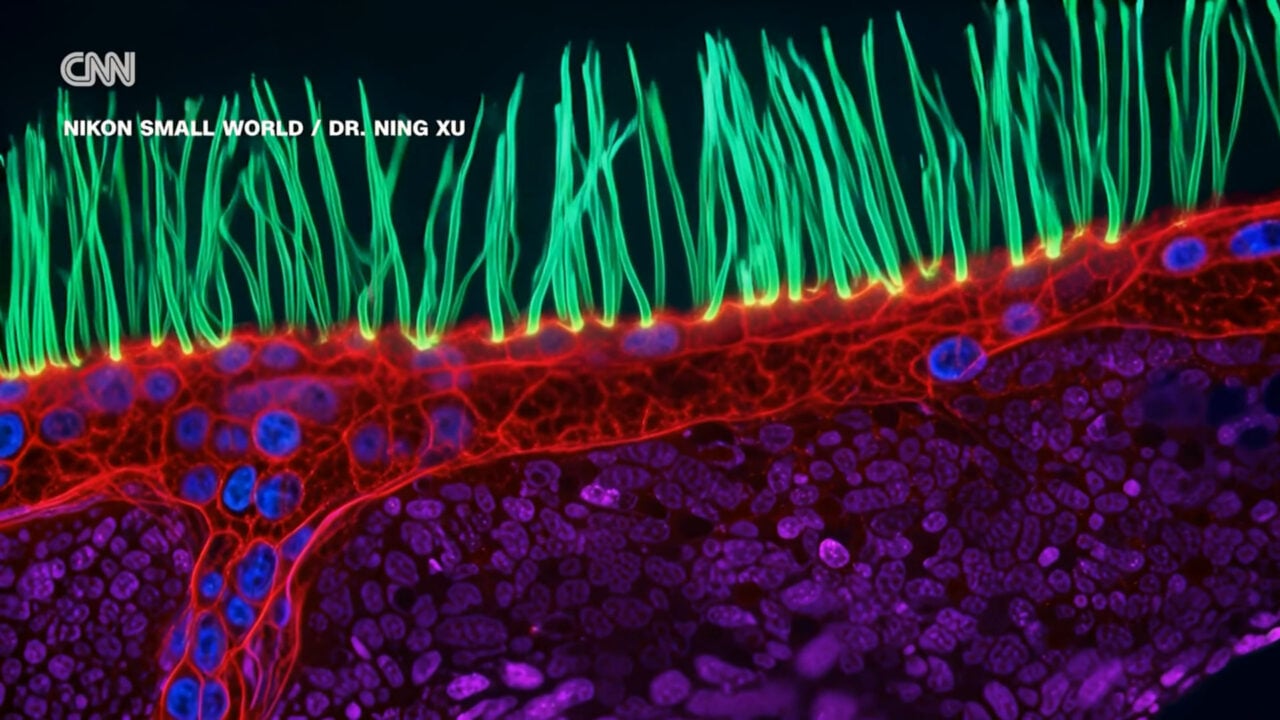
Contest-Winning Microscope Video Is Full of AI Confabulations, Scientists Say
The winner of Nikon's 2026 Small World In Motion contest said he used AI to post-process real video.
Brief by WorldPing · Original reporting by Gizmodo
 WorldPing
Dr Ning Xu denies he broke the rules of Nikon's annual Small World In Motion contest.
Platform, chip and AI decisions set the terms other companies have to build on, so a single announcement here tends to ripple through products, supply chains and regulation.
When each newsroom published on this story, oldest first — all times UTC.
Tiny image sparks big backlash in Nikon photo contest
ICE Has Been Dumping Protester Photos Into a Palantir Database
Amazon’s $1B plan to combat data center backlash draws more backlash
Contest-Winning Microscope Video Is Full of AI Confabulations, Scientists Say
The original report was published by BBC Tech. WorldPing does not claim that reporting — this page summarises and contextualises it.
Read the full report at BBC TechWorldPingThe winner of Nikon's 2026 Small World In Motion contest said he used AI to post-process real video.
Brief by WorldPing · Original reporting by Gizmodo
 WorldPing
Amazon praised for ending NDAs but slammed for downplaying data center pollution.
Brief by WorldPing · Original reporting by Ars Technica
 WorldPing
DHS agents not only tracked and intimidated people observing ICE activity in Maine, but stored information about them in a Palantir-built database, newly unsealed court filings say.
Brief by WorldPing · Original reporting by WIRED
 WorldPing
A caiman wearing a wig, two brown bears laughing and a leopard doing a handstand feature in the selection of finalists from this year’s Nikon Comedy Wildlife awards . Winners will be announced on 8 December Continue reading...
Brief by WorldPing · Original reporting by The Guardian
 WorldPing
Researchers from the LIMNO laboratory at EPFL have uncovered how different halides modify the surface chemistry of organic semiconductor nanoparticle photocatalysts.
Brief by WorldPing · Original reporting by Phys.org
 WorldPing
The circular photogalvanic effect (CPGE), a phenomenon that generates helicity-dependent photocurrents in noncentrosymmetric materials, can originate purely from a crystal's internal structure without a contribution from the surface, a study from Sci…
Brief by WorldPing · Original reporting by Phys.org