
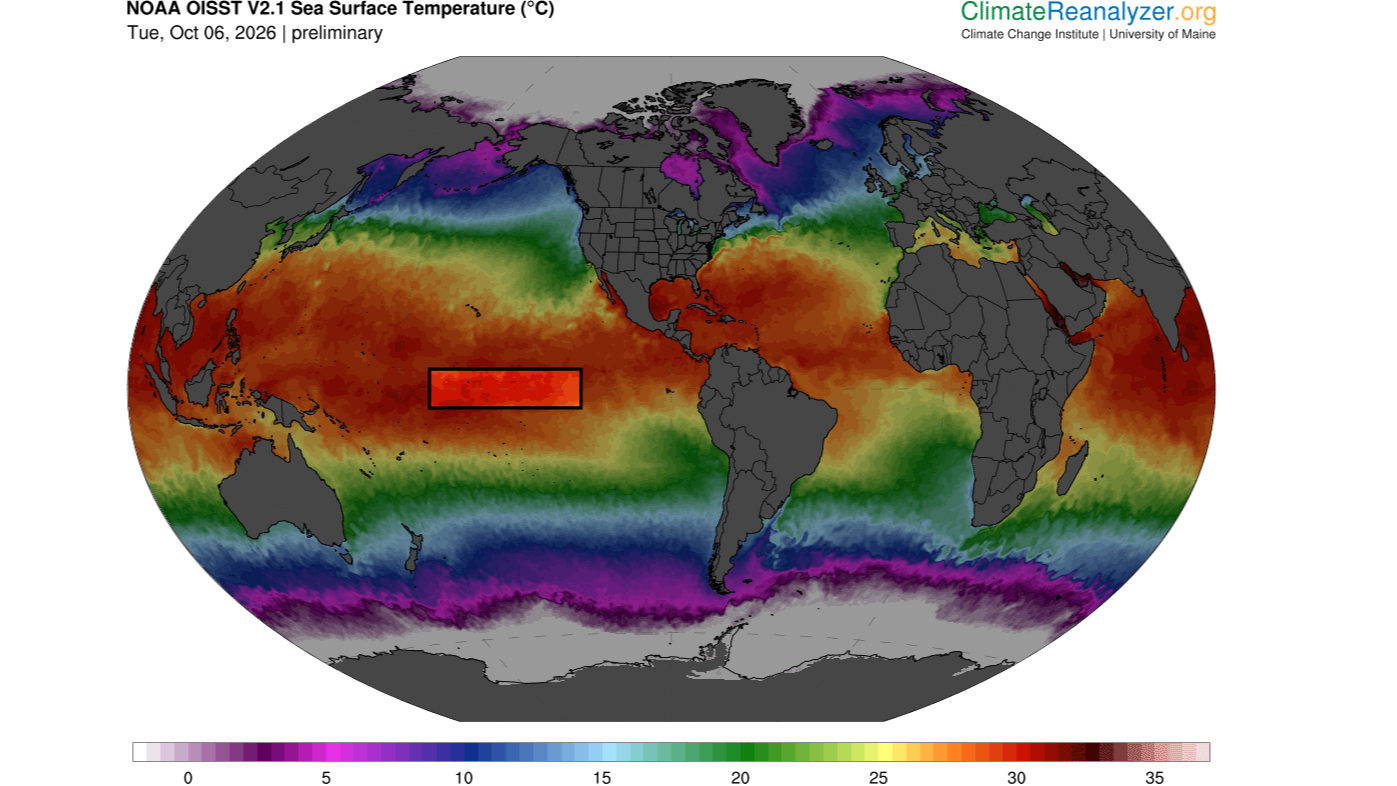
The central Pacific Ocean just broke a temperature record. Experts say it might signal a new kind of El Niño.

Written and edited by the WorldPing NewsdeskPublished Updated Original reporting: Live Science
The central Pacific Ocean just broke a temperature record. Experts say it might signal a new kind of El Niño.WorldPing
Image via Live Science.

What happened

The sea surface temperature in a key El Niño region has exceeded 86 degrees F for the first time on record, hinting that the strength and location of some El Niño events are transforming.

Key facts

  • The sea surface temperature in a key El Niño region has exceeded 86 degrees F for the first time on record, hinting that the strength and location of some El Niño events are transforming.
  • Reported by Live Science and published Thu, 08 Oct 2026 15:43:55 UTC.

Why it matters

Research findings and mission results set the evidence base that policy, funding and later discoveries build on.

What to watch next

  • Peer review status and replication of the findings
  • Mission milestones and next scheduled attempt
  • Funding or policy decisions that follow

Coverage timeline

When each newsroom published on this story, oldest first — all times UTC.

  1. Record El Niño threatens Great Barrier Reef with ecological shift

  2. Sea surface temperatures suggest El Niño is strengthening

  3. Seismic analysis reveals ancient traces of mantle flow beneath the Pacific's oldest plate

  4. Rise of collagen-eating microbes may help explain gaps in the fossil record

  5. The central Pacific Ocean just broke a temperature record. Experts say it might signal a new kind of El Niño.

Sources

The original report was published by Live Science. WorldPing does not claim that reporting — this page summarises and contextualises it.

Read the full report at Live Science

Related WorldPing coverage

Rise of collagen-eating microbes may help explain gaps in the fossil recordWorldPing
Phys.org

Rise of collagen-eating microbes may help explain gaps in the fossil record

Researchers may have uncovered the reason why some of Earth's earliest animals were commonly preserved as fossils—even though they were essentially fragile "bags of goo"—while later soft-bodied creatures have largely disappeared from the fossil record.

Brief by WorldPing · Original reporting by Phys.org

Sea surface temperatures suggest El Niño is strengtheningWorldPing
Phys.org

Sea surface temperatures suggest El Niño is strengthening

Sea surface temperatures in the central and eastern tropical Pacific are forecast to increase to record levels during October–December 2026, reflecting the strengthening of the El Niño event, which will drive weather patterns and affect economies, ec…

Brief by WorldPing · Original reporting by Phys.org

Record El Niño threatens Great Barrier Reef with ecological shiftWorldPing
New Scientist

Record El Niño threatens Great Barrier Reef with ecological shift

Researchers are worried about the impact the strongest-known El Niño will have on the Great Barrier Reef, and whether anything can be done to avert the World Heritage Area’s demise…

Brief by WorldPing · Original reporting by New Scientist

Seychelles giant tortoise numbers hit record 180,000 in conservation triumphWorldPing
The Guardian

Seychelles giant tortoise numbers hit record 180,000 in conservation triumph

Free-roaming Aldabra population thrives on Indian Ocean atoll due to decades-long recovery programme A survey of the world’s largest free-roaming giant tortoise population has revealed that the once endangered species is thriving.

Brief by WorldPing · Original reporting by The Guardian