 WorldPing
 WorldPing
New Scientist
Tattoos could be turned on and off with light
A new type of ink could overcome one of the main downsides of tattoos: the inability to make them invisible…
Brief by WorldPing · Original reporting by New Scientist
 WorldPing
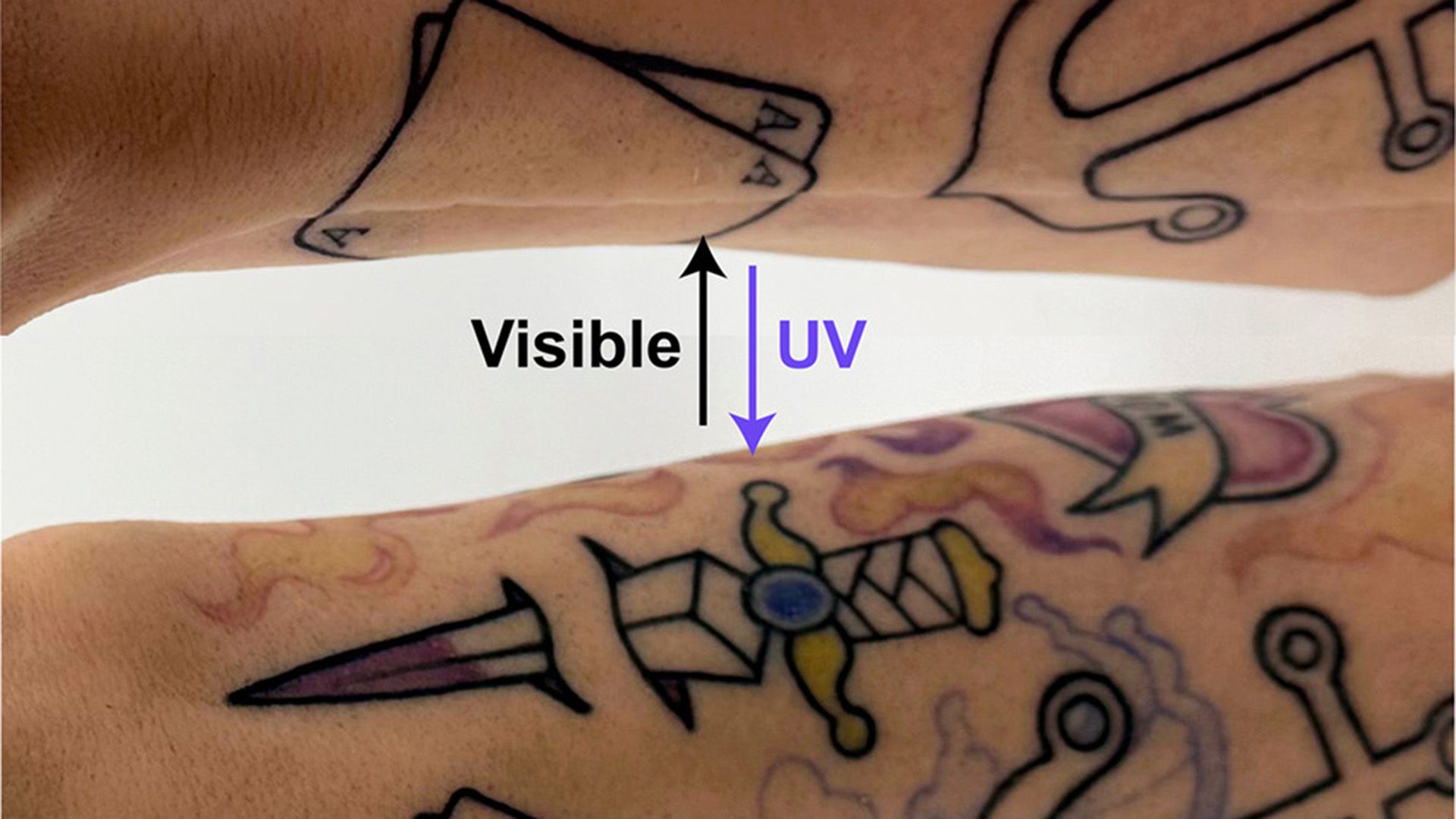
A team of engineers has designed a new line of multicolored tattoo inks that switch on and off with different kinds of light.
Research findings and mission results set the evidence base that policy, funding and later discoveries build on.
When each newsroom published on this story, oldest first — all times UTC.
Scientists find hidden materials that could improve batteries and solar fuels
Nearly 1 in 10 young adults could have fatty, narrow arteries
Scientists have identified a 'protein signature' in blood that could predict healthy aging
Cool chemistry trick allows new tattoos to 'turn on and off'
Light-responsive inks could make tattoos visible on demand, but safety remains unproven
The original report was published by Phys.org. WorldPing does not claim that reporting — this page summarises and contextualises it.
Read the full report at Phys.orgWorldPingA new type of ink could overcome one of the main downsides of tattoos: the inability to make them invisible…
Brief by WorldPing · Original reporting by New Scientist
 WorldPing
Having a certain ratio of proteins produced by immune cells in your blood is linked to a higher risk of age-related diseases, scientists report.
Brief by WorldPing · Original reporting by Live Science
 WorldPing
Researchers created multicolored tattoo inks that are activated by different wavelengths of light, allowing people to hide their tattoos in different scenarios.
Brief by WorldPing · Original reporting by Live Science
 WorldPing
Atherosclerosis, the build-up of fatty plaque in arteries, usually affects people older than 50, but a "meaningful" proportion of younger adults also have the condition…
Brief by WorldPing · Original reporting by New Scientist
Scientists have uncovered a hidden world of “in-between” materials that briefly form as chemical ingredients are heated, revealing structures that conventional methods can miss.
Brief by WorldPing · Original reporting by ScienceDaily
A Canadian radio telescope has detected the faint glow of hydrogen from billions of years ago using only its own observations, proving a long-awaited way to map the distant universe can actually work.
Brief by WorldPing · Original reporting by ScienceDaily