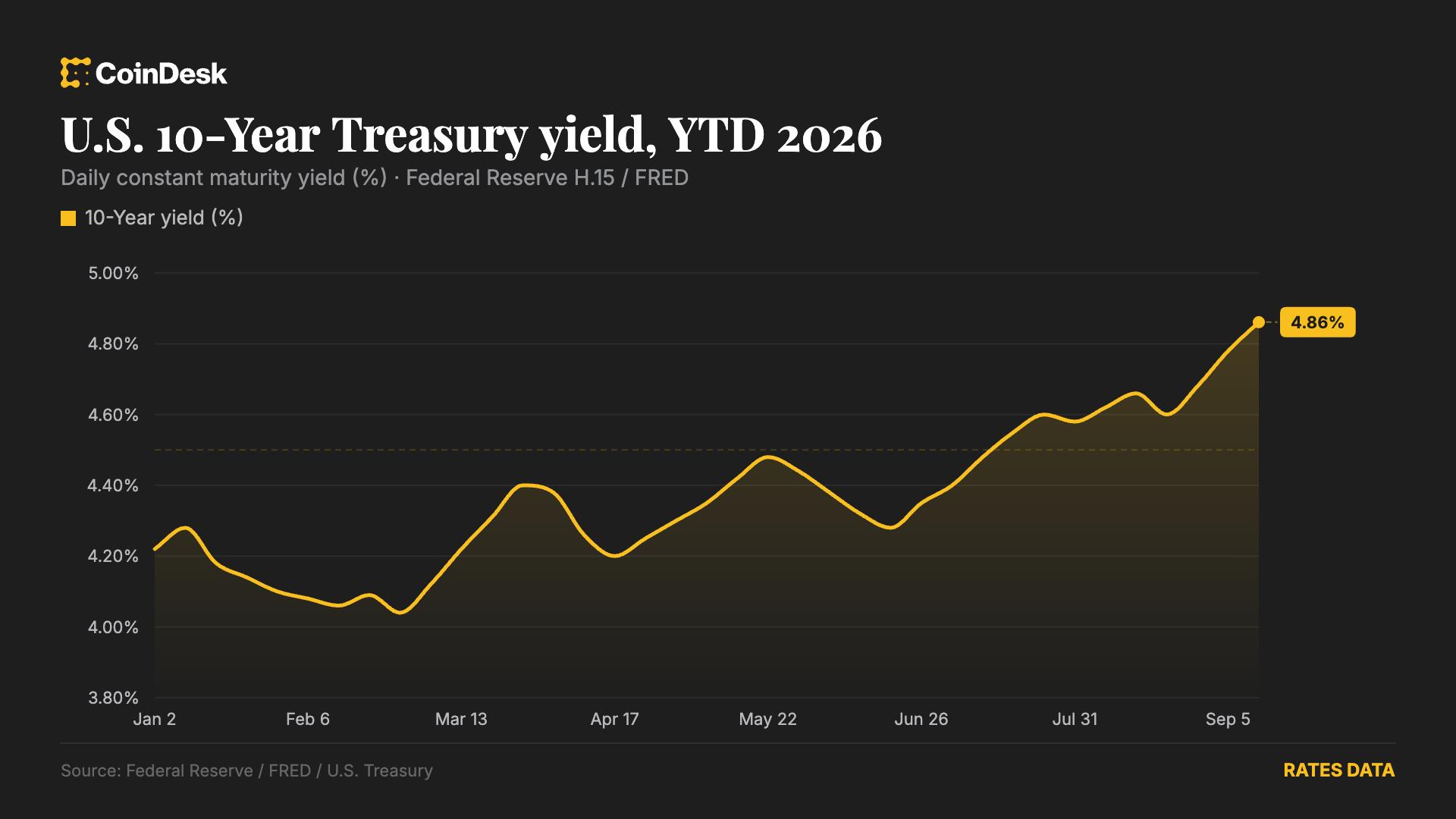

Treasury yields continue to rise even as Bessent doubles down on bond buybacks

Written and edited by the WorldPing NewsdeskPublished Updated Original reporting: CoinDesk
Treasury yields continue to rise even as Bessent doubles down on bond buybacksWorldPing
Image via CoinDesk.

What happened

Long-term yields moved higher despite a $6 billion Treasury buyback, as debt concerns and rising oil prices continue to pressure global bond markets.

Key facts

  • Long-term yields moved higher despite a $6 billion Treasury buyback, as debt concerns and rising oil prices continue to pressure global bond markets.
  • Reported by CoinDesk and published Thu, 10 Sep 2026 11:47:41 UTC.

Why it matters

Digital-asset markets react to catalysts within minutes, and liquidity, ETF flows and regulatory signals are usually what decide whether a move sticks.

What to watch next

  • Whether spot volume and open interest confirm the move
  • Liquidation clusters around the current price
  • ETF flow data and any regulatory follow-up

Coverage timeline

When each newsroom published on this story, oldest first — all times UTC.

  1. Treasury’s $6 billion bond intervention creates a stealth test for Bitcoin’s next move

  2. Live updates: Treasury yields climb further as Brent crude tops $102 and tech futures slip

  3. Treasury Secretary Bessent urges CLARITY Act passage after Senate returns

  4. Treasury yields continue to rise even as Bessent doubles down on bond buybacks

Sources

The original report was published by CoinDesk. WorldPing does not claim that reporting — this page summarises and contextualises it.

Read the full report at CoinDesk

Follow the story

Living hubs that keep updating as this story develops.

Related WorldPing coverage

Giant reed brought to California now doubles or triples wildfire fuelWorldPing
Times of India

Giant reed brought to California now doubles or triples wildfire fuel

Giant reed, a plant native to eastern Asia, was introduced to California in the 1820s for roofing material and erosion control. It has since become an invasive weed, growing rapidly and forming dense stands that displace native plants.

Brief by WorldPing · Original reporting by Times of India